


I didn’t even realize pelvic floor physical therapy existed when I was in graduate school. My training focused on hips, knees, shoulders, and backs—the areas most people associate with physical therapy. Pelvic health was barely on my radar.
That changed when, during my final year of physical therapy graduate school, a close friend experienced a traumatic labor and delivery. As she struggled through her recovery, she said something that stuck with me: “Riva, it’s so great you’re becoming a PT—you’ll be able to help women like me.”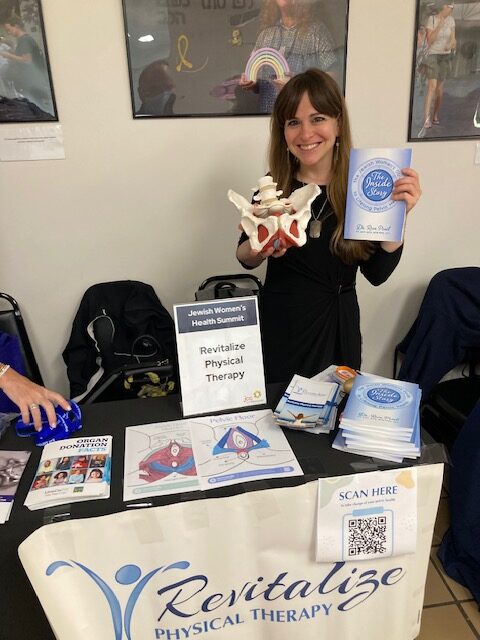
I remember my response clearly: “I won’t. I know orthopedics, but I wouldn’t be able to help with your postpartum needs.”
She looked at me and said, “You should really meet my pelvic floor PT. She changed my life.”
That moment shifted something. I realized I didn’t just want to be a physical therapist—I wanted to change lives too.
Her therapist, Marilyn Freedman, generously took time out of her busy schedule to meet with me. What I learned in that conversation opened my eyes. Pelvic floor therapy was about so much more than incontinence—it addressed pelvic pain, bowel dysfunction, pregnancy, postpartum recovery, and so many deeply personal challenges that often go untreated.
Then something serendipitous happened. Just a few weeks later, Hunter College—where I was a PT student—hosted Pelvic Floor 1 with Holly Herman & Kathe Wallace, two of the leading educators in this field. I took the course.
And I fell in love.
I remember calling my mother afterward and saying, “I found my calling.”
Since then, it’s been a beautiful relationship—one rooted in compassion, education, and the belief that everyone deserves to feel seen, supported, and empowered in their body.
The more I see, the more I realize how much work we have ahead of us. Raising awareness about these issues means educating both the lay and medical communities so people can access the care they need in a timely manner. It also means expanding our reach—hiring and training more therapists so we can help more individuals who are currently suffering in silence. Beyond that, there is still so much advocacy needed to truly champion women’s health rights. My team and I are deeply committed to this mission, and we look forward to taking on each challenge ahead—one step, one patient, and one breakthrough at a time.