


What are Kegels?

The Key to Kegels

What are Kegels? Put simply, Kegels are to the pelvic floor what yoga is to the body, mind and spirit. They are an accessible form of low-impact exercise that has the potential to dramatically improve your life.

To get even more granular, “Kegel pelvic floor exercises are used to strengthen the muscles that support your uterus, bladder, bowel, and rectum,” according to WebMD. Kegels have enjoyed some publicity as of late, being touted as a way to treat erectile dysfunction and achieve pelvic floors of steel.

So how do you do them?

Many of us are not aware of where our pelvic floor muscles even are, so engaging them can be a challenge. 

There are several ways, per Healthline. One is to simply replicate the experience of holding in gas. If you attempt that and then feel it in your vagina or back end, you’re doing it right! You can also locate these muscles by stopping urine while on the seat or putting a finger inside yourself while doing the exercise to feel the pull. Although please do not get in the habit of doing this routinely, as it sends mixed messages to your pelvic floor! You get one shot at it, for educational purposes only!

If you are of a certain age, think back to those claw arcade machines you played with as a child. The Cleveland Clinic compares the motion of a Kegel to the claw opening and closing around a prize. 

You then will tighten your muscles for a count of five, and relax for the same count. For optimal help, perform these endurance contractions 20x, three times per week. You can also perform Quick Flicks, or “fast exhale squeeze, fast inhale release” 50x, three times per week.

Your physical therapy appointment is another great time to check your Kegel form. You shouldn’t be embarrassed or feel like you are bothering your therapist. That’s what they are there for!

Now, let’s take a closer look at what they’re for.

Pelvic Organ Prolapse

As I explain in my book The Inside Story, “POP is associated with the excessive descent of one or more of the pelvic organs or the vaginal wall.” It can happen after childbirth, and there are several different types of prolapse. These include uterine or cervix prolapse, cystocele/anterior prolapse, rectocele/posterior prolapse, and rectal prolapse. I also talk about prolapse in this blog post – well worth the read! Pelvic organ prolapse has a number of treatments, ranging from a pessary to surgery, but Kegels can make pelvic floor muscles stronger and those are the muscles that keep those organs stable. 

Incontinence

Pelvic floor muscles affect how much control we have over our urination and defecation, which is why it may be recommended to strengthen them to treat urinary, urge and fecal incontinence

Better Sex

Now I’ve got your attention! Yes, Kegels can even help in this department. According to WebMD, there is scientific evidence that Kegels can “enhance female sexual arousal by relaxing the vagina, improving lubrication and allowing more blood flow to the genitals.” In men, they may heighten the pleasure of orgasm and provide “greater control over ejaculation.” (Pelvic floor muscles really are the center to so much that goes on in our bodies!)

Who Shouldn’t Do Kegels

Kegels can be a problem for people with a hypertonic pelvic floor. This means the pelvic floor muscles are unable to fully relax. Nebraska Medicine states, “While these exercises may benefit both men and women, performing too many ─ or performing them incorrectly ─ may increase muscle tension and pain, or worsen your symptoms.” One journalist received a hypertonic pelvic floor diagnosis simply from doing Kegels alone, so you have to be careful. They also provide very limited benefit for overflow incontinence.

As usual, it is best to speak with a healthcare provider. 

Also, have patience: Don’t expect overnight success as they can take up to a few months to work. Try adding Kegels to your Google calendar or doing them first thing in the morning. You can even pair them with your favorite podcast to help make the habit automatic. And the result is not only a stronger pelvic floor but stronger relationships, less embarrassment, less pain, more pleasure – overall, a pretty big impact for such a really tiny movement!     
Could a Simple Swab Test Predict Pelvic Organ Prolapse?


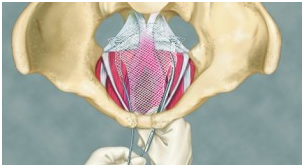
Pelvic organ prolapse is one of many pelvic floor disorders we are able to treat here at Revitalize Physical Therapy. Never heard of it? I’m not surprised! It doesn’t get the coverage it should. Data on how many women are dealing with it also appears to vary. It affects approximately 3% of women in America, according to WebMD; however, the University of Chicago Medical Center says that as many as a third of women can have it by age 80. No small amount!


Pelvic organ prolapse is the medical term for what happens when organs, such as the bladder, small intestine, rectum, vagina or uterus, fall either into or out of the vaginal canal or the anus. This can happen due to issues, including pregnancy, delivery, pelvic organ cancers, and constipation. Any woman at any age can be affected potentially, but it’s most prevalent in midlife and among younger senior citizens.


Pelvic organ prolapse goes by different names, so you may hear your medical provider use a word like rectocele for a prolapse of the rectum, or cyctocele, when the bladder moves into the vagina. (Cyctocele is in fact the most common form of pelvic organ prolapse.) Pelvic organ prolapse can result in urinary frequency, incomplete emptying of the rectum, or painful sex, to name a few.  


So now that you’ve heard about pelvic organ prolapse, your next question might be: How can I avoid it? Fair enough! Some risk factors can be averted and others can’t. You can’t help things like, say, a history of this in your family or having had a baby, but you can make sure you are eating sufficient fiber (25-30 grams/day), and drinking enough water (8 cups/day) to try to avoid constipation. Furthermore, both urination and defecation should be completely passive processes. No straining is required, and if you must strain or push excessively to pass bowel movements, speak to your friendly neighborhood pelvic floor PT! Finally, don’t start smoking or give it up if you are already in the habit (which is a good idea anyway).


If you suspect that you have pelvic organ prolapse, the issue may be diagnosed by an ultrasound of your pelvis or other tests involving the bladder or urination. Physical therapy, a pessary and, when all else fails, surgery are used to treat pelvic organ prolapse. (It is worth noting, though, that surgery has a high chance of not working.)


Happily, science may be coming along to help further: Researchers at UT Southwestern Medical Center have found a potentially noninvasive way to screen for pelvic organ prolapse. They have discovered a vaginal swab test that may identify women who are prone to developing pelvic organ prolapse. The study appears in a medical journal called Aging Medicine. This test found that certain proteins were higher in the vaginal secretions of postmenopausal women who were diagnosed with pelvic organ prolapse. 


If we know which women are likely to have pelvic organ prolapse, a doctor or pelvic floor therapist can initiate a preventative plan rather than one that treats them when they already are showing symptoms. When it comes to prophylactic treatment, I like to say that an ounce of prevention is worth more than a pound of cure!


The article doesn’t specify when the swab test will be available, but I hope it will come and soon. And you can rest assured that as soon as I have any more updates, I will keep you posted, dear readers. In closing, the sooner we know what’s going on with our pelvic floor health, the better. 


RESOURCES/FURTHER READING:


https://www.utsouthwestern.edu/newsroom/articles/year-2023/july-pelvic-floor-disorders.html


https://www.totalurologycare.com/services/pelvic-organ-prolapse?gclid=Cj0KCQjwtamlBhD3ARIsAARoaEypktyKARrFGB9toCH_X7KJD2u1nmb3wLQZTDxeCXhzkr6Ji2WUY8kaAptfEALw_wcB


https://nyulangone.org/conditions/pelvic-organ-prolapse/diagnosis?cid=sem_google&googadcamp=Virtual_Urgent_Care_Performance_Max&googadgroup=Performance_Max&googkeyword=&googmatchtype=&insitesid=1367&gad=1&gclid=Cj0KCQjwtamlBhD3ARIsAARoaEw2MHvExjQ5YaXD_OT05Fv35GhbOr1sSjuD3EFS1uVz4aS8OVrC6qUaAg3KEALw_wcB


https://www.webmd.com/women/pelvic-organ-prolapse


https://www.ncbi.nlm.nih.gov/pmc/articles/PMC4166938/


https://www.uchicagomedicine.org/conditions-services/obgyn/urogynecology/pelvic-organ-prolapse

                   ©2026 Revitalize Physical Therapy | 4386 Broadway, Ste 4, New York, NY 10040 | 214 W 85th St, New York, NY 10024 | 3736 Henry Hudson Pkwy, Bronx, NY 10463 | 16-00 Route 208 S Suite 204, Fair Lawn NJ 07410
732-595-1DPT (1378) | riva@revitalizephysicaltherapy.com

Stay Connected:
Site Design by GMCT Solutions LLC